Discover Oban’s Temperate Rainforest: A Hidden Adventure in the Heart of Town
Oban has a wild secret hiding in plain sight. Just beyond the streets, shops and seafront lies a fragment of one of the rarest habitats on Earth: temperate rainforest. Not the steamy jungle of the tropics, but its cool, misty cousin, a place of moss-covered rocks, twisted branches, filtered green light and air so damp and clean that lichens, liverworts and ferns can thrive in astonishing abundance. And this habitat is exceptionally rare. They cover just 1% of the globe’s surface & account for less than 2% of Scotland’s woodlands, and places like Dunollie Wood are among the best surviving examples in North Argyll.

What is a temperate rainforest?
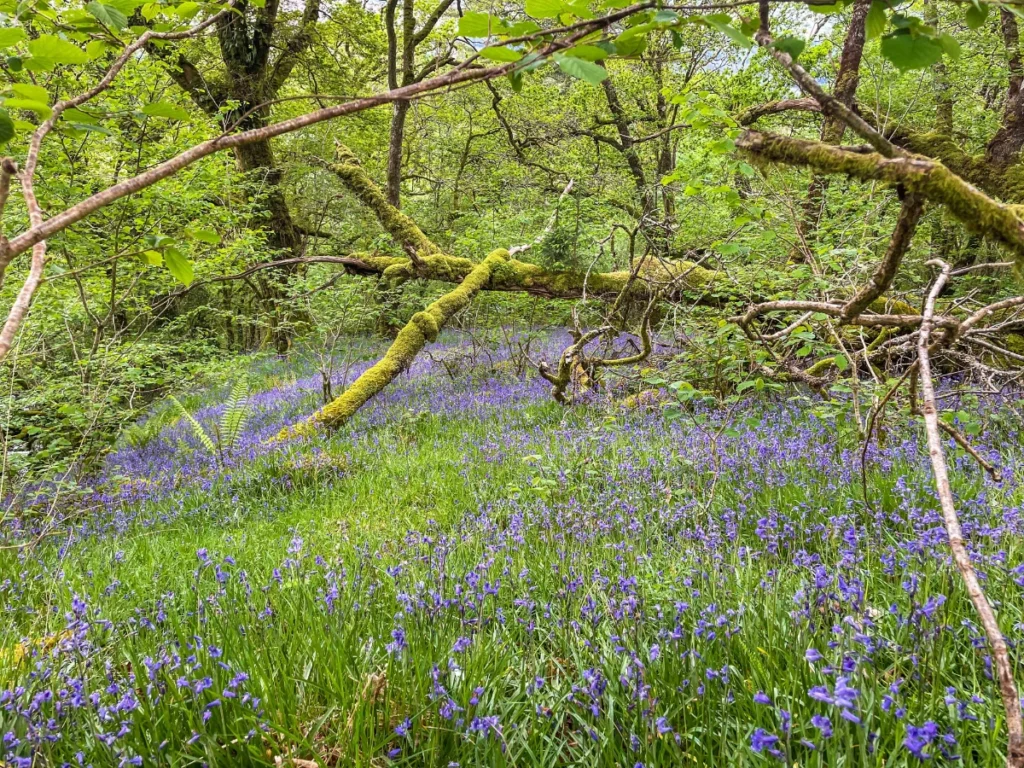
A temperate rainforest is a woodland shaped by rain, humidity, mild temperatures, clean oceanic air over millennia.
Here in Argyll, conditions are perfect for this amazing but delicate habitat to thrive. Situated on the west coast, our “hyper-oceanic” climate is ideal, providing clean Atlantic air and more rain than you can shake a soggy welly at! The warm embrace of the Gulf Stream keeps our coastal winters mild and our summers refreshingly cool, with temperatures rarely wavering more than 10°C throughout the year. Exactly the conditions the rainforest needs to thrive.
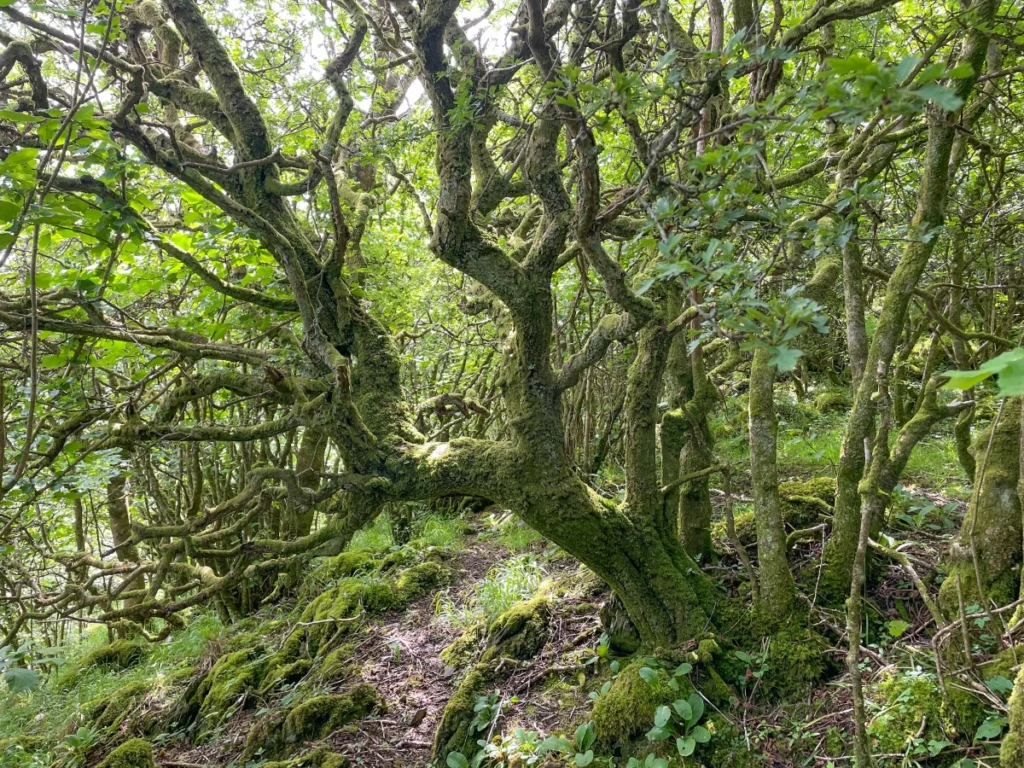
In these woods, oak, hazel, birch, rowan, ash, willow, holly and cherry all help create the structure of the forest, but the real magic is in the detail. Look closely and you will find mosses thick as cushions, lichens coating branches in silver and green, liverworts tucked into rock crevices, fungi rising from rotting wood, and ferns unfurling from every damp corner.
Why are temperate rainforests so important?
These woods are beautiful, but they are also doing vital work.
The trees create the sheltering canopy, and that canopy is alive with insects and other invertebrates. They matter enormously. They pollinate plants, recycle nutrients and help support wider food webs. Insects are the basis of many food chains, feeding birds, bats, amphibians and other wildlife. When insect life is healthy, the whole forest is stronger.
That matters all the more in Scotland, where nature has already been heavily depleted. What biodiversity we still have left is incredibly precious, and rainforest is one of its great refuges: a place where rare and threatened species can still survive if we protect the habitat they depend on.
Rainforests also store carbon in their trees, soils and deep layers of moss-rich organic matter, helping to lock up carbon that would otherwise be in the atmosphere. They slow water, shelter soils, reduce erosion, and create cool, damp, resilient habitats in an age of climate instability.
Just as importantly, they reconnect people with something ancient. They remind us that nature is not somewhere far away. In Oban, it is woven right into the town. it’s not uncommon for wildlife such as deer, red squirrels and even pine martens to brighten our day as they travel through gardens on their journey from rainforest fragment to fragment.

Where can I see rainforest in and around Oban?
Oban is lucky to be surrounded by fragments of rainforest that can be easily reached on foot.
Dunollie Wood
For the sure-footed, Dunollie Wood is one of the best places to begin. Managed by the Woodland Trust, it is a wonderful 32-hectare ancient woodland with spectacular views across the bay to Mull. Since 2020, Dunollie has been actively managed to restore and strengthen this unique woodland by removing non-native species such as Rhododendron ponticum and spruce, and replanting, where appropriate, with native species such as aspen and wild cherry.
Starting from the orientation board at the Corran Halls, enjoy a slow walk around the waymarked trail and keep your eyes open for rare and special woodland species.
More info here:
https://www.woodlandtrust.org.uk/visiting-woods/woods/dunollie-wood/
Waterfall Wood
For a more accessible adventure, head to the emerging Waterfall Wood art trail. Thanks to the Highlands & Islands Environment Foundation, this fragment of forgotten rainforest is undergoing major rehabilitation, but you will still be able to spot all kinds of treasures, from rare species to fun woodland art, it even has its own waterfall to admire. Small but full of character, it reminds us that extraordinary things can survive in ordinary places.
More information is available here: Waterfall Wood
What threatens this habitat?
Despite all its richness, temperate rainforest is fragile. Much of this habitat has been reduced to scattered fragments. In Oban these remain often on steeply sloping land that is unsuitable for development. Even where woodland survives, the rainforest community within it can be badly damaged by overgrazing, which stops young trees from regenerating; by invasive species such as Rhododendron ponticum, which can smother native plants; and by tree diseases such as ash dieback.
Where active management is taking place, removing invasive non-native species is often a key part of rainforest restoration. That shows just how hands-on this conservation work has to be. This is why the Oban Nature Network is working so hard to find and map these species across our area so that we can tackle them. Rainforest depends on continuity: once broken, overgrazed, polluted or dried out, it can take a very long time for its richest communities to recover.