Temperate rainforest lichens
One of the indicators of the richness of a temperate rainforest is the range and extent of its lichen growth. These can be luxuriant and leafy, hanging off the trunks, or thin crusts on branches and twigs.
What are lichens?
A lichen is a symbiotic partnership between a fungus and either an algae or a cyanobacteria. A fungus can’t produce its own food and normally is reliant on food from external sources such as rotting wood or fallen leaves. Because lichens grow on bark and rocks this is not an option so instead they get their food from an algae or cyanobacteria (a photobiont) that lives within their body. The photobiont can photosynthesise enough to support itself and its fungal host, and benefits from the protection of the fungal body.
Local lichens to look for
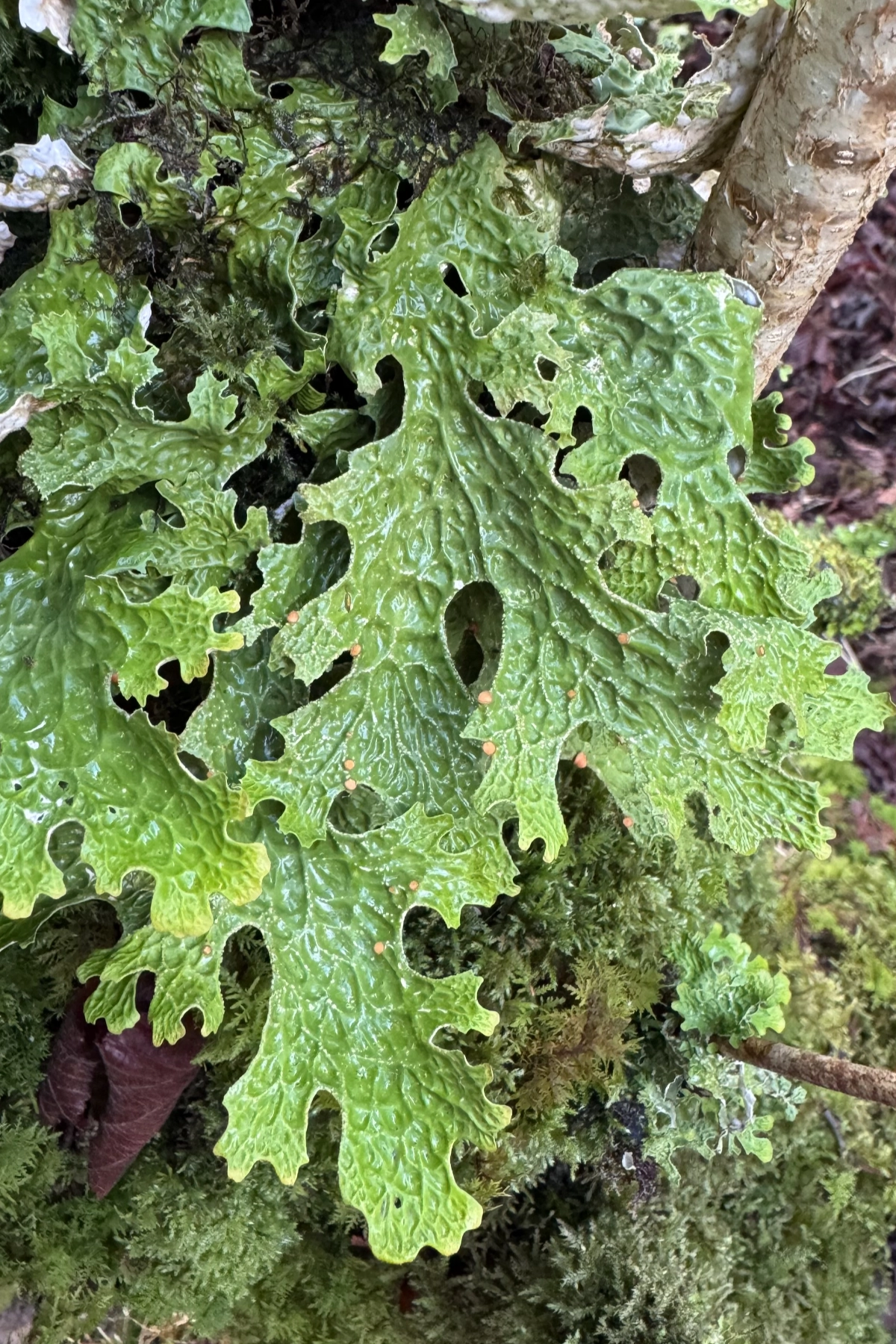
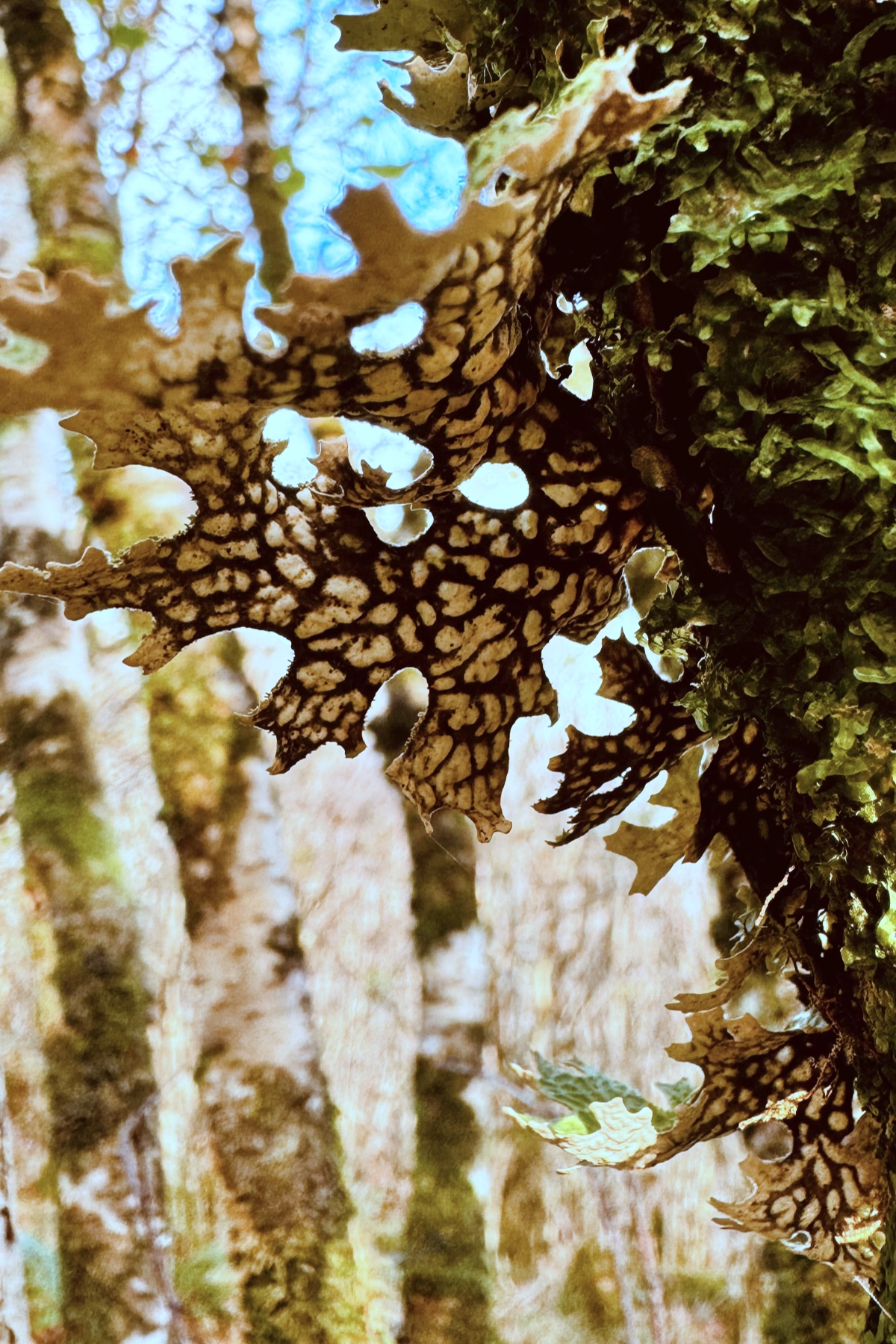
Lobaria pulmonaria Lungwort lichen
One of the easier lichens to spot on trees and sometimes rocks. When it is damp it is a bright green but it dries out to almost grey in the summer. The body (thallus) has a network of ridges, and if you look on the underside these are very obviously darker. It has lobes a bit like a lung, hence the name.
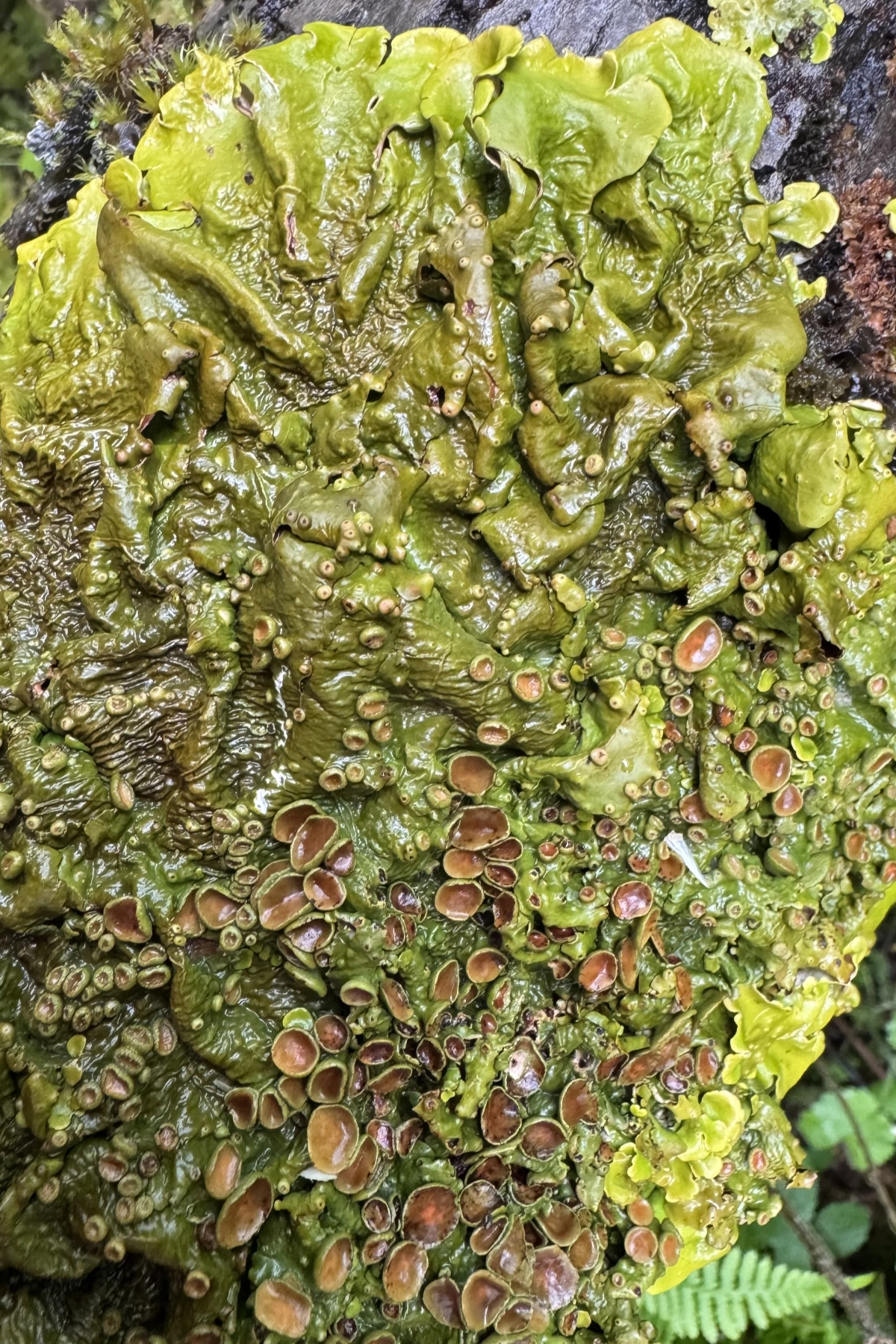
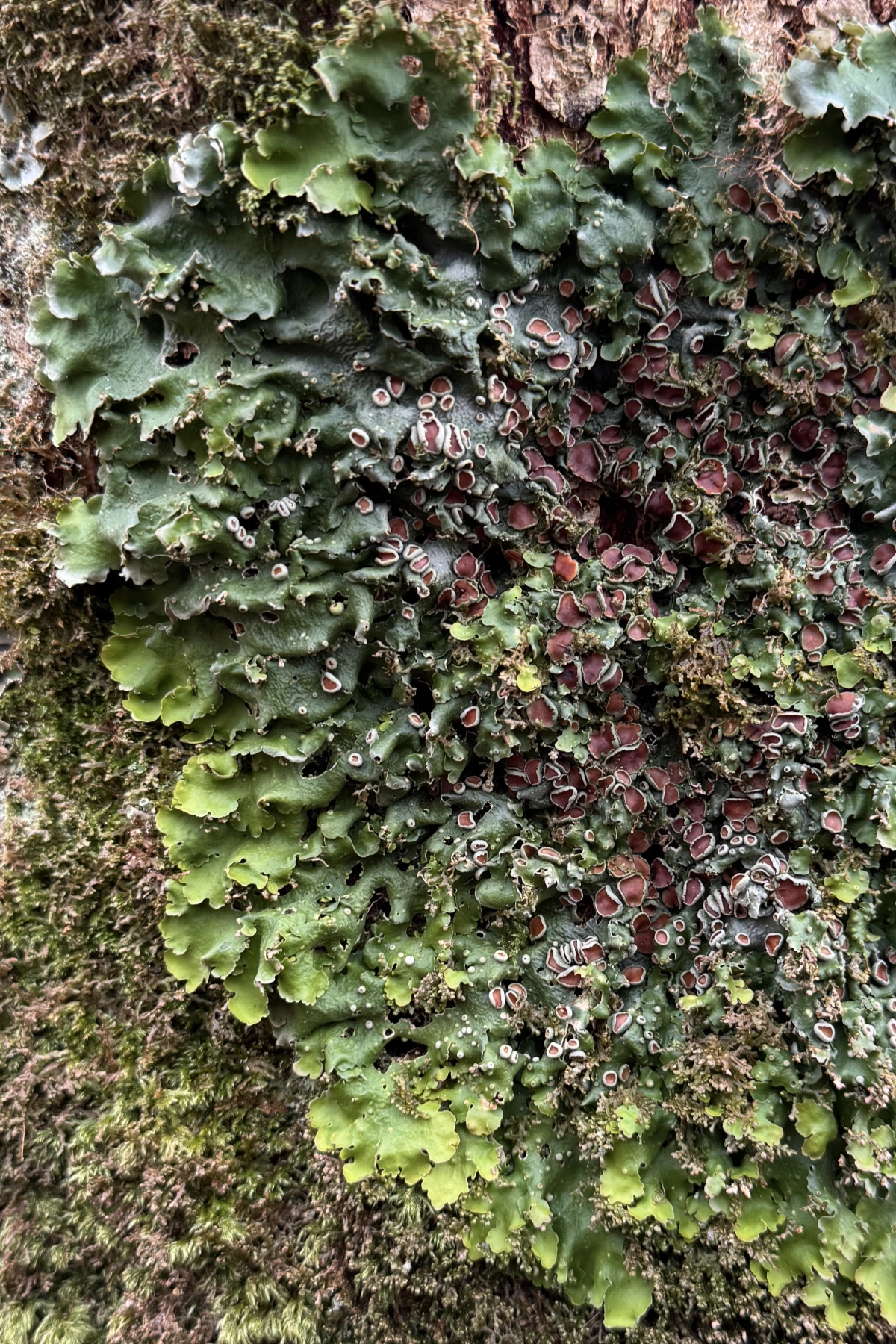
Ricasolia virens Green satin lichen
Sometimes known as Dragon Skin, and you can see why! When wet it is a vibrant green but dries out in summer to grey, as shown below. If you see a dry one you can wet it and it will turn green again quite quickly. The browny-orange circles on it are its fruiting bodies (apothecia).

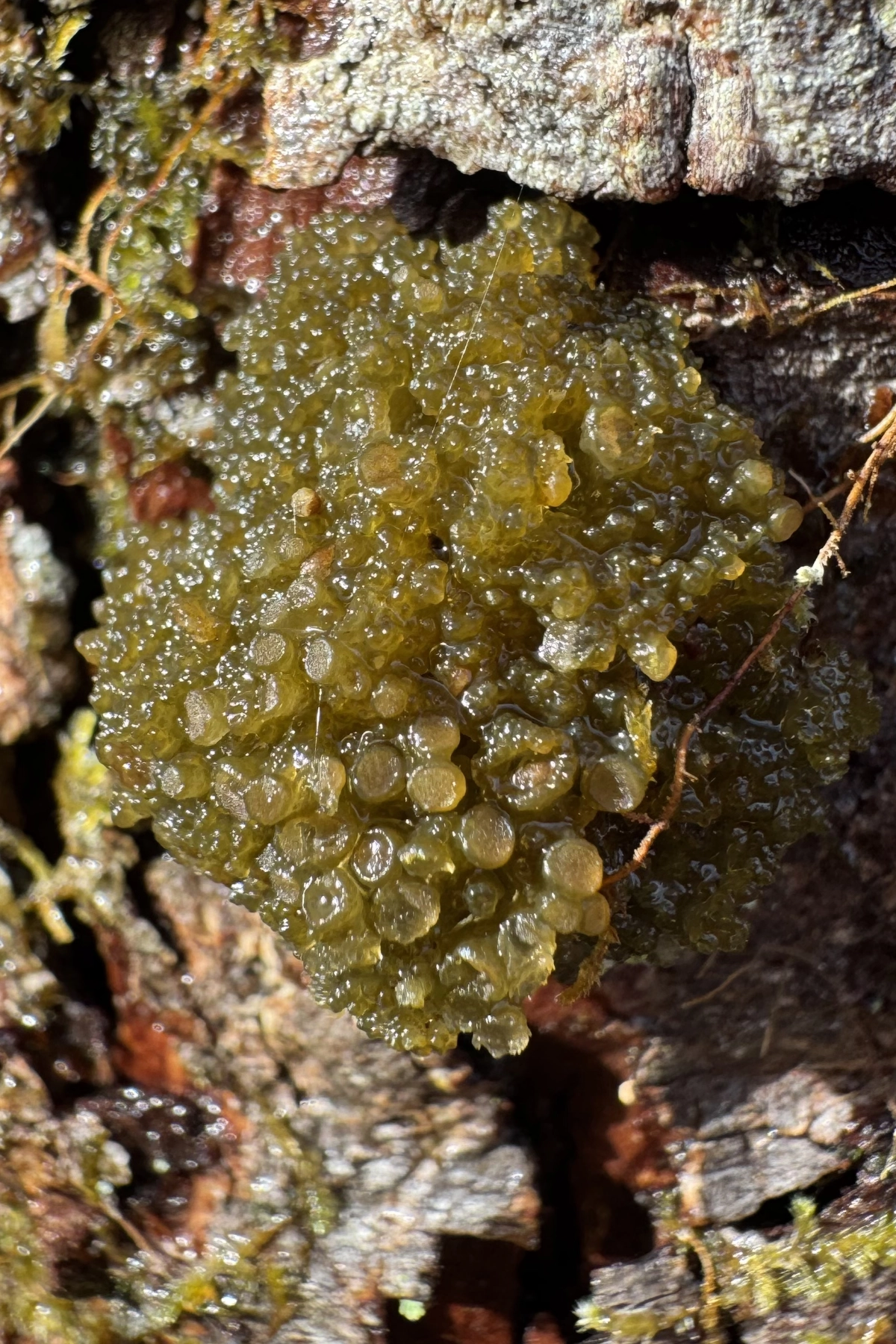
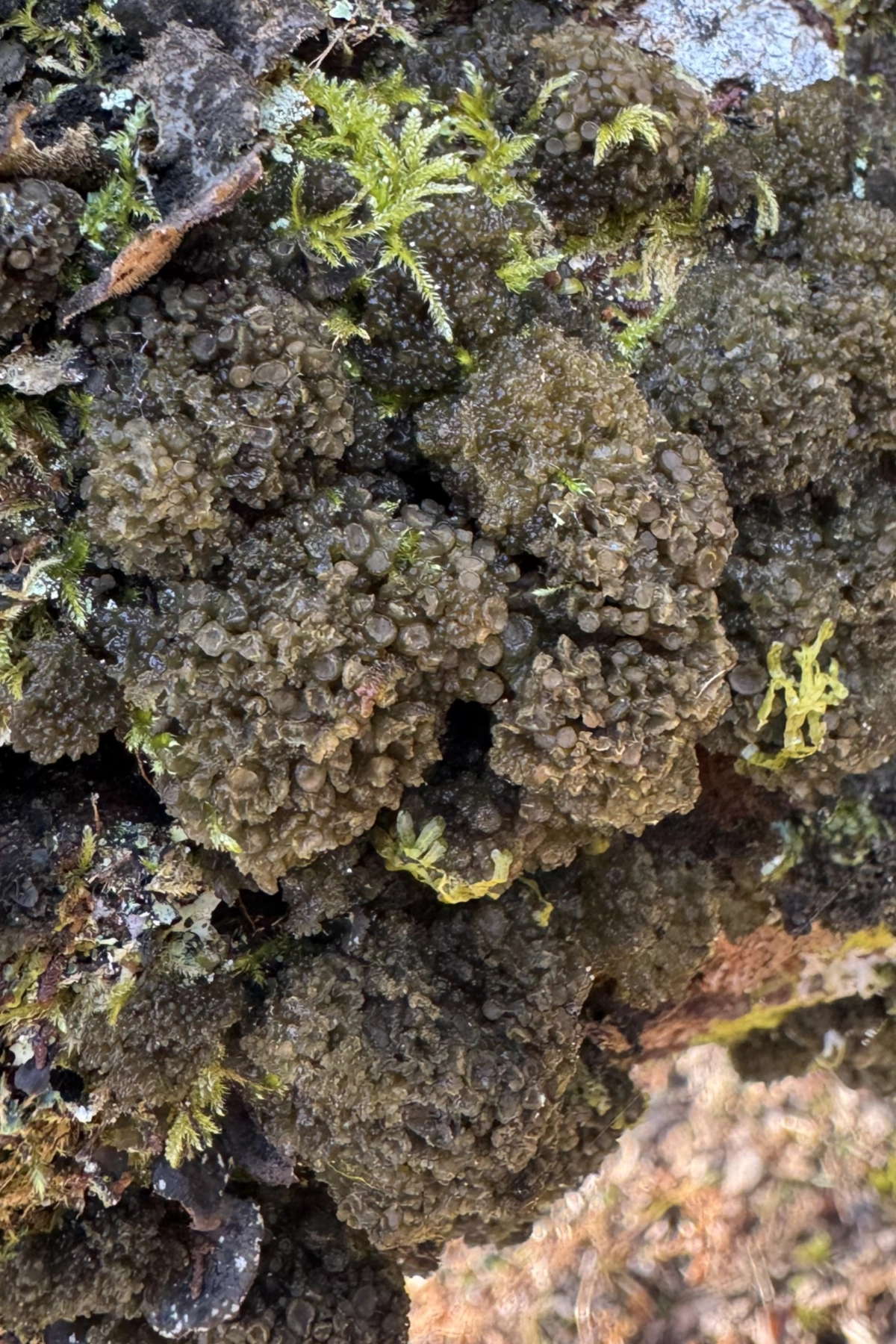
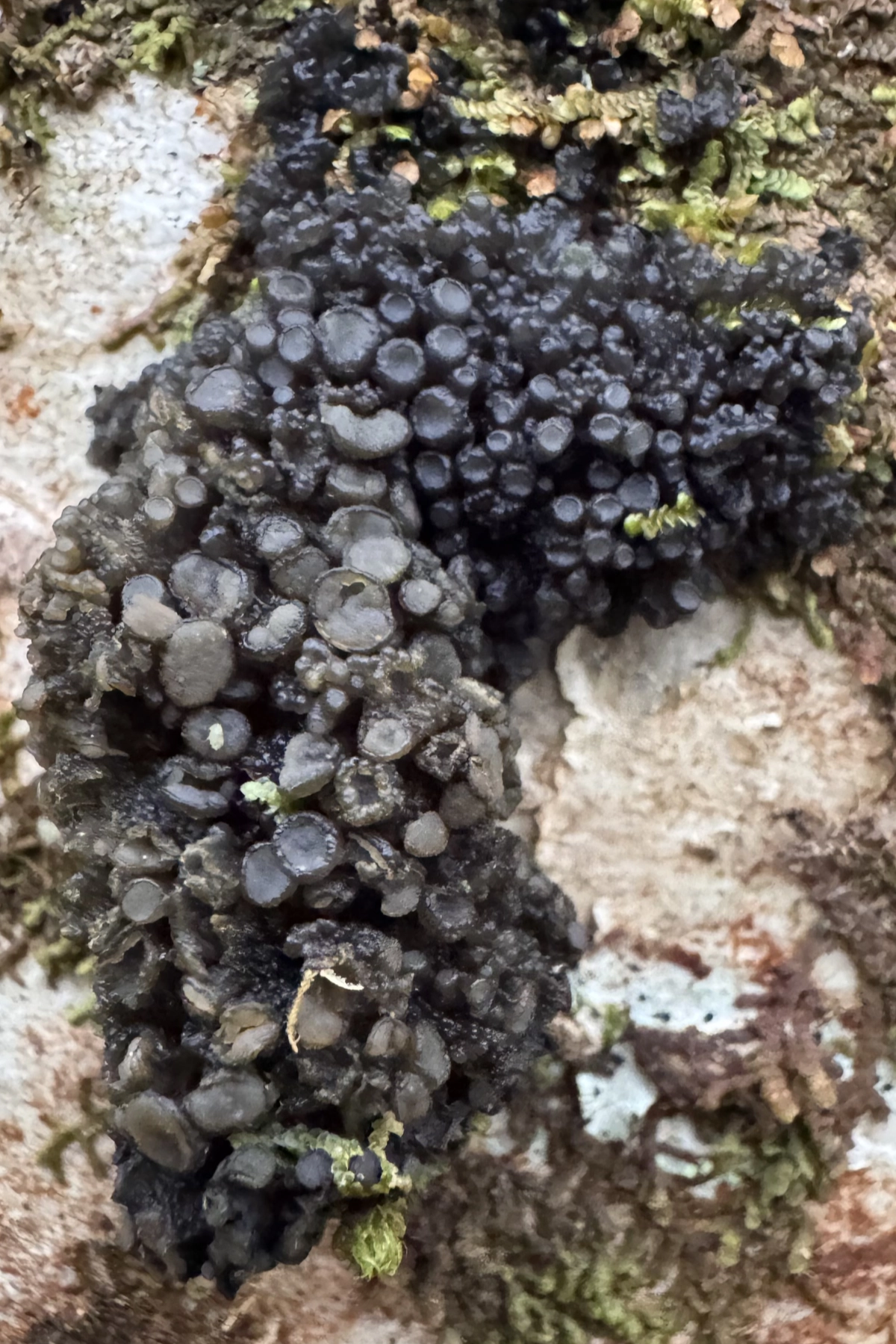
Gabura fascicularis Octopus suckers
A rarer lichen in the UK with most of them found on the West Coast of Scotland. When wet these little clusters of round growths look just like an octopus’s suckers. You may see them on their own or sometimes in larger groups. We’ve got lots near the rugby and football pitches in Oban.
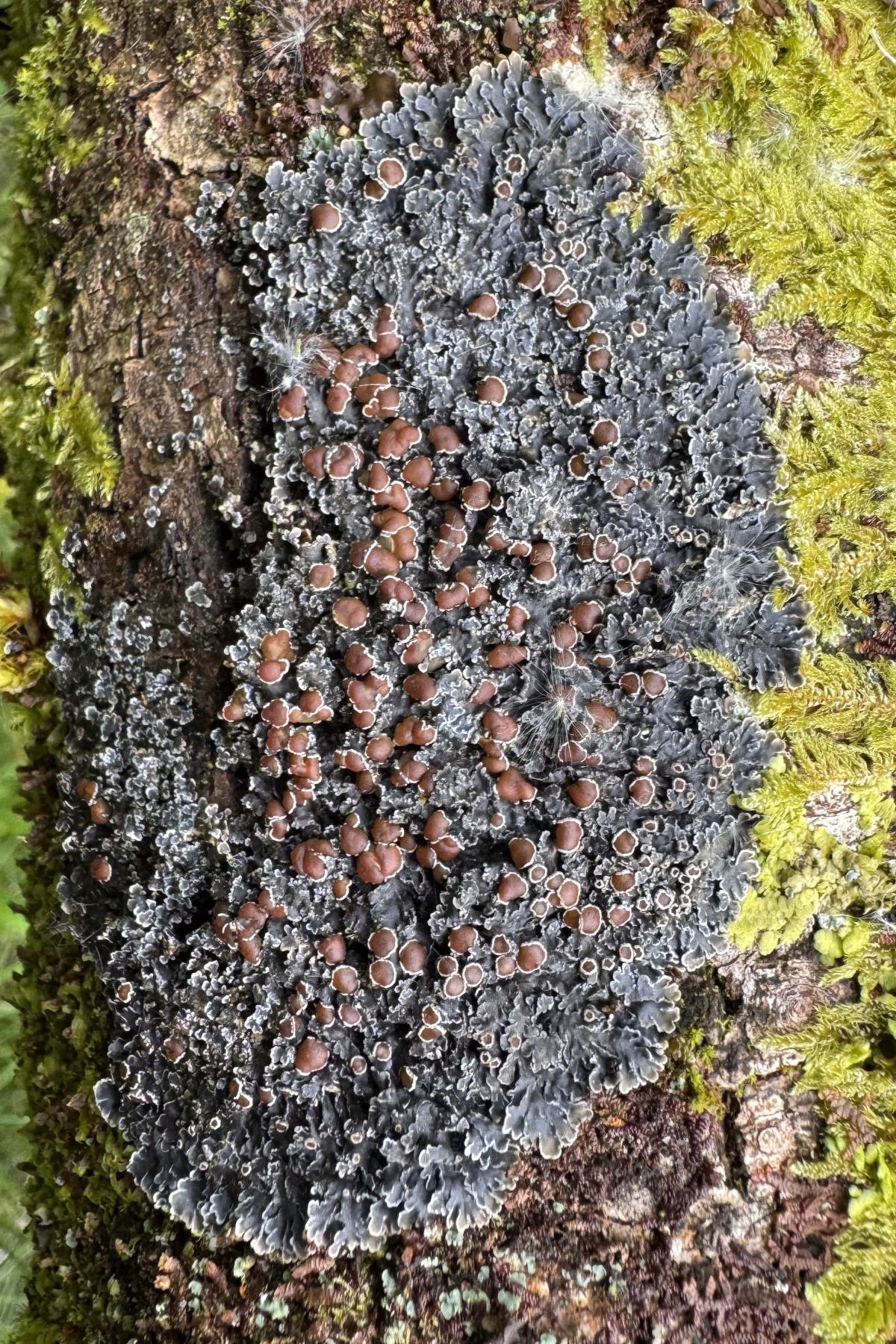
Pannaria rubiginosa Red-eyed shingle lichen
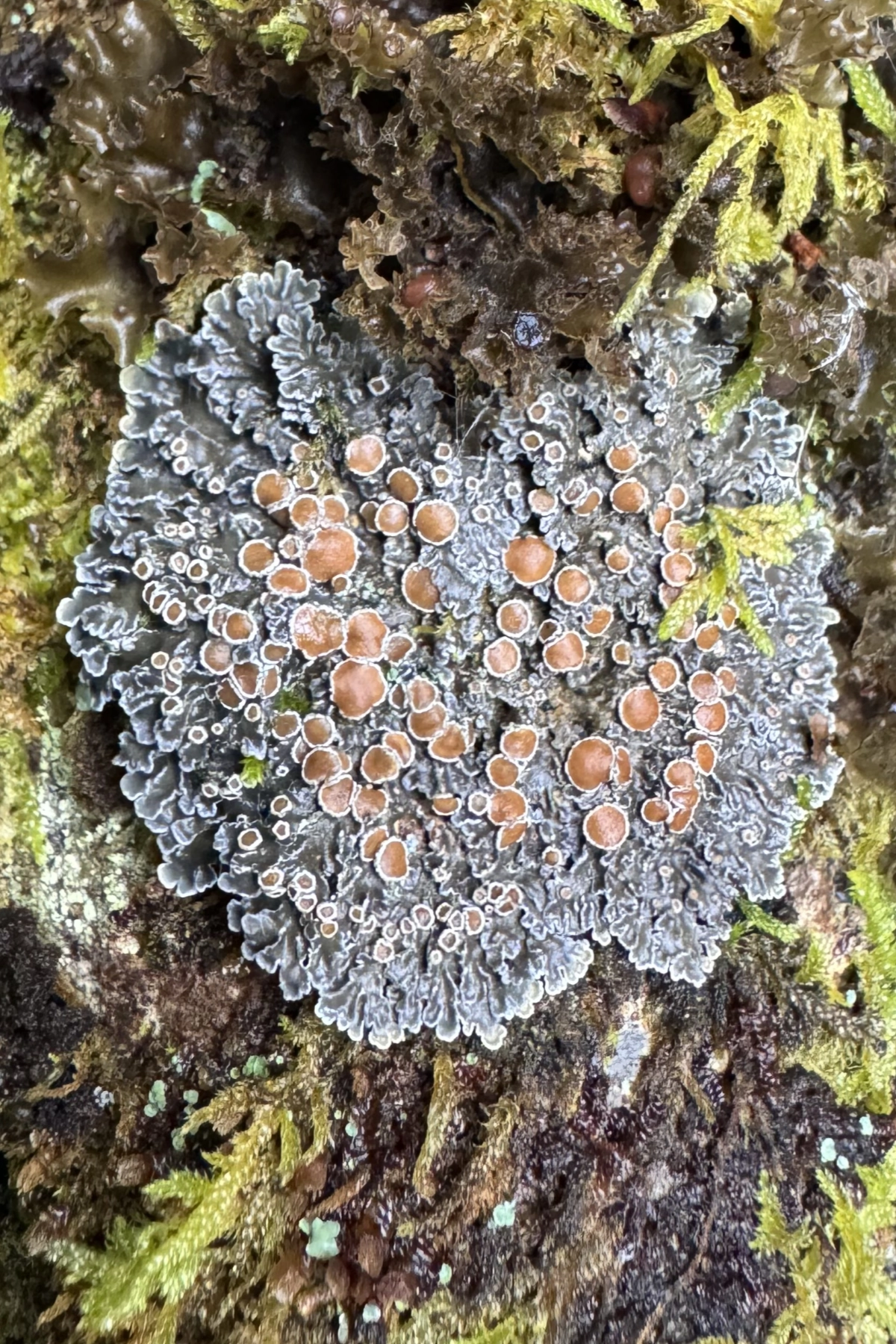
The main body (thallus) of the lichen is made up of lots of little grey lobes with white edges. Growing outwards from the centre you will normally see their brown fruiting bodies (apothecia) that release spores. They can be small patches, or grow out to cover large areas of a trunk.

Leptogium burgessii Frilly-fruited jelly-skin
A frequent lichen in this area, with a brown leafy body and amazing fruits that have a frilly edge. As they are a jelly lichen they can change appearance when they are damp, and appear a lot softer and more luxurious.
Sticta sylvatica Stinky stitica
Part of a family of slightly rarer lichens that can be recognised by their downy underside with little bald patches in it, leaving lighter circles. Sticta sylvatica is the most common one locally and as well as looking quite leafy it also smells of fish, hence the name.
Pectenia atlantica a Felt lichen
The felt lichens have a wonderful undersurface that looks like felt, and can be grey or even a beautiful grey-blue colour. This can be seen round the edges of the lichen.
Printed guides to lichens
There are lichen guides available on the Plantlife website that can be printed out or saved to your phone. These cover some of the more common and easily recognised species in our area:
Lichens of Scotland’s Rainforest: Guide 1 – Lichens on ash, hazel, willow, rowan and old oak
Lichens of Scotland’s Rainforest: Guide 2 – Lichens on birch, alder and oak